what to do to prepare for a renal ul
The phrase "renal nutrition" may be one of the most confusing in the nutrition globe. If you Google information technology, you volition notice endless lists of foods to avoid. These lists and advice are often alien, which can be confusing and frustrating.
You may even find websites that merits foods or regimens volition "cure" kidney disease. This is completely artificial 99% of the time, and these recommendations can be dangerous to people with kidney disease. I'd steer articulate of sites making claims like these.
Read on to sympathise what a renal nutrition is and what it means for you.
What Does a "Renal Nutrition" Mean?
"Renal" is merely a fancy word for "kidney". In the medical world, kidney has many different names including "renal" and "neph". For example, the formal title for your kidney doctor is a "nephrologist".
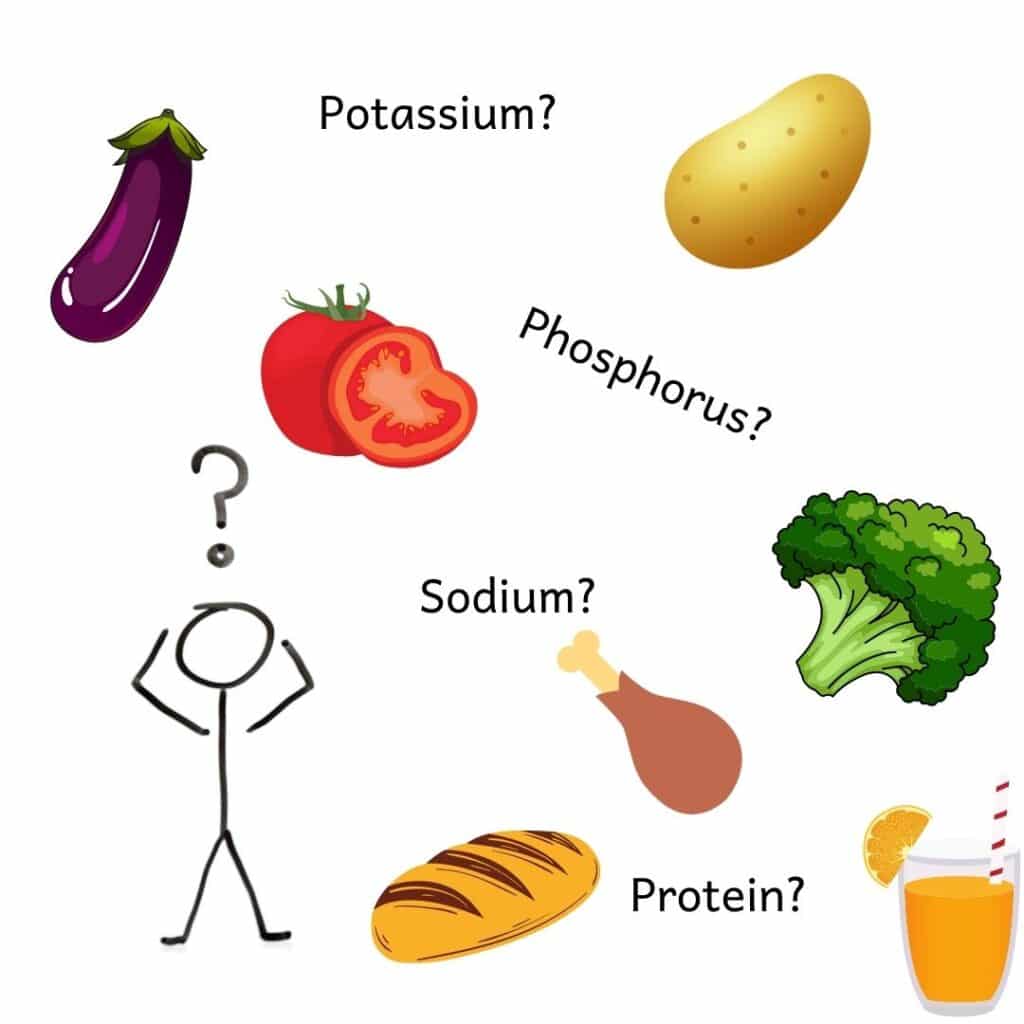
And then, a renal diet is a nutrition that is expert for kidneys. The kicker is, in that location is no single renal diet that is right for everyone. A healthy renal diet for you lot isvery dependent on what kind of kidney disease you have, what your kidney function is, and what your other labs look similar.
Know that in that location is no single nutrient that will cure or prevent progression of kidney disease. A salubrious renal nutrition must focus on whole diet patterns instead of eating (or limiting!) single foods.
A Renal Diet is Different For Everyone!
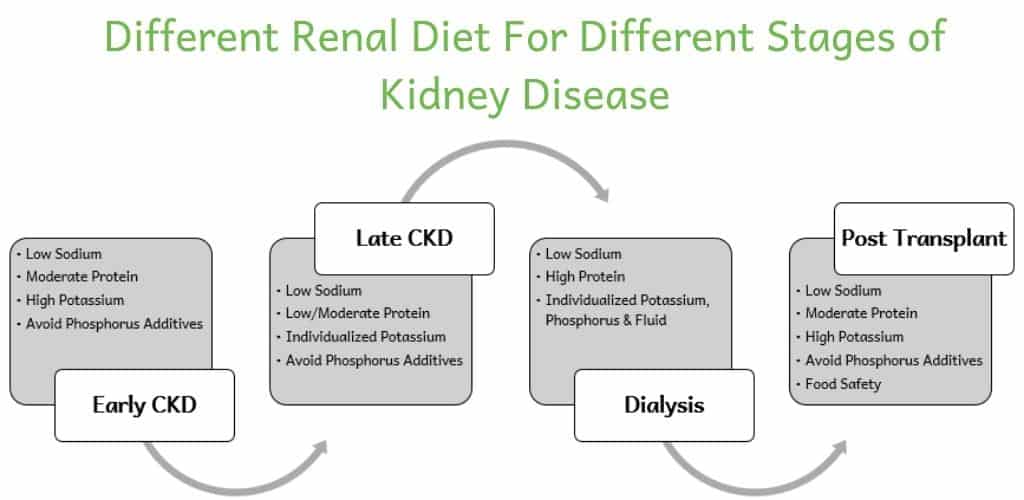
Some of the "renal diet" confusion comes from the fact that a kidney friendly diet is non the aforementioned for everyone. For example, a renal diet for someone with early stages of kidney disease is very different than a renal diet for the later stages of disease.
To complicate things farther, both of those diets are unlike than a renal diet for someone who is on dialysis or has a history of kidney stones. No wonder everyone is confused!
Here is an overview of how the recommendations for a renal nutrition differ. This will assistance you learn what a renal nutrition is for you.
What Is a Renal Diet for Chronic Kidney Illness?
A renal diet for Chronic Kidney Disease (CKD) changes drastically depending on the stage of CKD you accept. I'll walk you through each attribute of a renal diet for CKD and assistance you lot understand how needs change.
Sodium
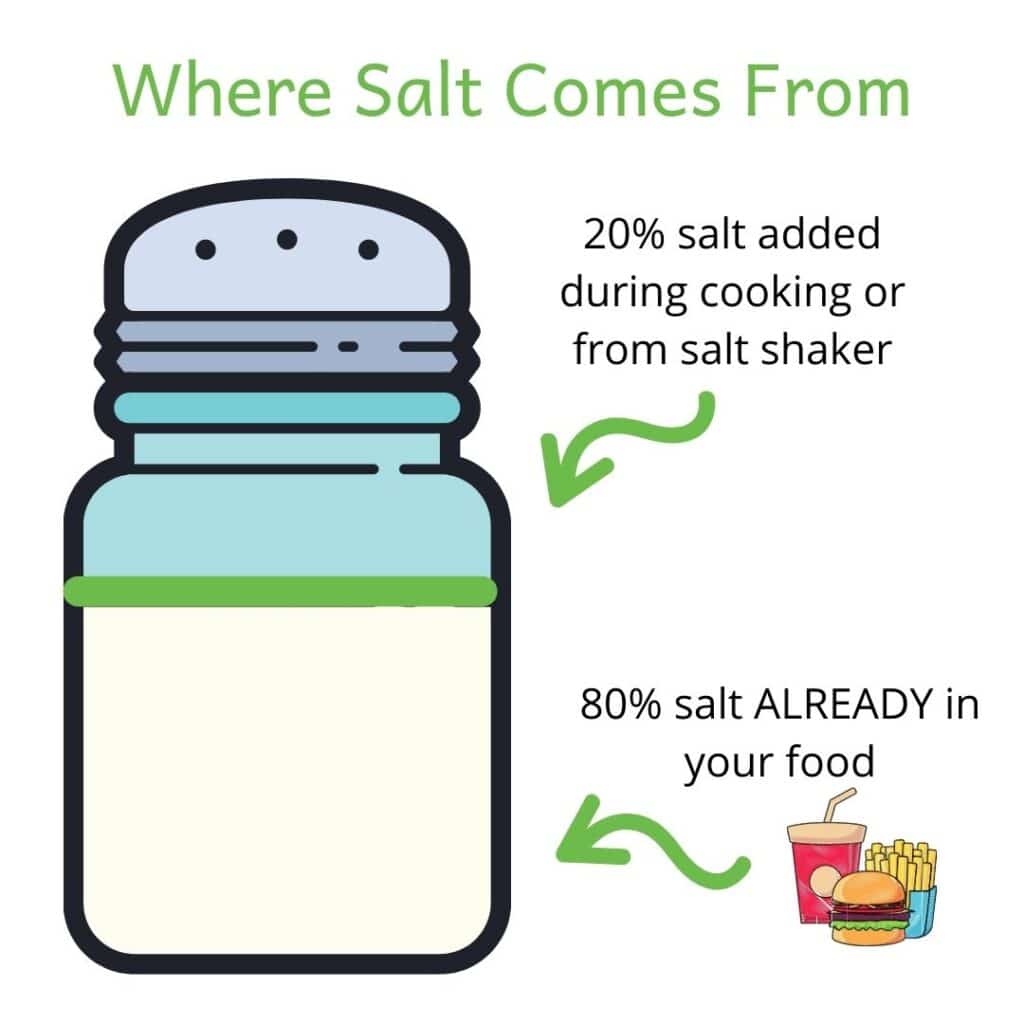
For all stages of kidney disease, sodium should exist limited to 1,500-ii,300mg per mean solar day on a renal diet. (ane) This helps control claret pressure level (which is primal to preventing more kidney harm!) and swelling.
Keeping sodium in check can as well help lower the amount of protein in your urine.
Protein
In CKD phase 1-3a (or, a GFR of 45ml/min or more), a healthy renal nutrition is moderately depression in poly peptide. Most people should aim for 0.8 grams of protein per kilogram body weight per day in these early on stages. This is enough of protein to maintain or build muscle!
If CKD progresses to stages 3b-v (or, a GFR less than 45ml/min), protein recommendations go down. For this stage, the National Kidney Foundation recommends a protein intake betwixt 0.55-0.6 g/kg body weight. (i)
Of annotation, people who take both diabetes and CKD should not limit protein this much. Aim for 0.8 chiliad/kg body weight if you lot take diabetes. (1)
On dialysis, poly peptide needs increment. A nutrition high in protein is important to maintain muscle and forestall poor nutrition in people on dialysis. Poly peptide recommendations get upwardly to 1.2 grams of protein per kilogram body weight per twenty-four hours for people on dialysis. (1)
Protein needs are tricky and may exist different based on your body size, nutrition condition, medical history, and age. Ask your dietitian how much protein is right for yous!
Potassium
On a renal diet, dietary potassium only needs to be limited in people with high blood potassium. In the early stages of kidney disease, blood potassium levels are usually normal! In fact, a nutrition high in potassium tin can assistance control blood pressure and protect your kidneys. (2)
If kidney affliction progresses to stage iv or 5, high claret potassium levels (aka hyperkalemia) are more common. The kidneys are not able to go rid of potassium besides. Potassium tin build up in your trunk and, in severe cases, cause serious issues like centre arrhythmias. If your claret potassium level is high, then cutting back how much potassium you swallow is a skilful idea. (one)
Phosphorus
Bogus phosphorus should be limited for nearly everyone with kidney disease, no matter the phase.
High levels of phosphorus tin can cause bone disease, heart disease and even faster progression of kidney affliction.
Natural sources of phosphorus, such equally in whole grains, beans, nuts, seeds, and lentils, unremarkably practise not need to exist restricted until very advanced CKD (if ever). This is especially truthful if phosphorus from animal products is avoided and plant proteins are used in place of meat, craven and fish at meals.
Natural phosphorus is poorly absorbed, and then does non have equally large an bear upon on phosphorus levels as artificial phosphorus does. (3)
Dietary Acid Load
Reducing dietary acid load is the most important thing you can do nutritionally to slow the progression of kidney disease. (four)
Dietary acid load primarily comes from animal protein. Fruits and vegetables assistance neutralize acrid. This is why information technology is so important that any renal diet include Plenty of fruits and veggies, no thing the phase!
Aim for at least 5 servings of fruits and vegetables every day.
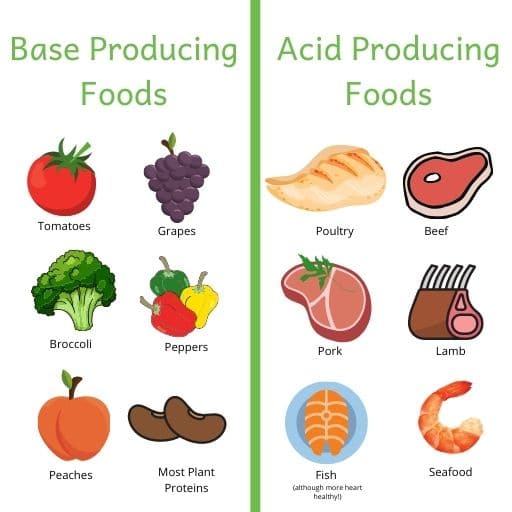
Plant proteins produce significantly less acid than animate being proteins. Eating more constitute proteins like basics, seeds, lentils, whole grains, and beans in identify of beast proteins can slow CKD progression.
Learn more virtually dietary acid load and PRAL.
Fluid
Both dehydration and not drinking enough fluid can hurt kidneys. However, nearly people with kidney illness do not need to limit fluid unless kidney disease is very advanced. Most people on a renal diet for kidney disease should drinkable almost 2 liters of h2o each 24-hour interval.
However, people with some health conditions may need to limit fluid. Here are some examples:
- Dialysis
- Advanced stages of CKD
- Heart failure
- Liver failure
Fluid needs on a renal diet are catchy! Ask your doctor how much fluid is right for you lot.
What Is a Renal Diet for Polycystic Kidney Disease?
A renal diet for polycystic kidney disease (PKD) is based on GFR level and what stage of CKD y'all accept. If you accept PKD with normal kidney function (GFR >90ml/min), you take stage 1 CKD.
Please refer to the "What Is a Renal Nutrition for Chronic Kidney Affliction?" above for more specific recommendations.
Sodium and fluid are particularly of import on a renal diet for people with PKD. Eating too much table salt can cause faster cyst growth, in addition to raising blood pressure. (5)
A very high fluid intake is ofttimes recommended for people with PKD to dull cyst growth too! Drinking three-4 liters of fluid each twenty-four hours reduces a hormone called "vasopressin". Vasopressin can accelerate cyst growth in PKD. So, drinking a lot of water can assist slow cyst growth. (5)
There are some new studies done in animals showing some promising benefits of a keto diet for PKD. However, more research is needed before this diet should be recommended to people with PKD. Learn more than most the keto diet and PKD.
More almost a healthy nutrition for polycystic kidney disease.
What Is a Renal Diet for People with a Kidney Transplant?
Nutrition is an important piece of protecting a new kidney! A renal diet after kidney transplant is individual to your lab values.
For most people, a renal diet after transplant is similar to the early stages of CKD. Information technology is best to limit sodium and large amounts of protein, especially creature protein. Focusing on eating lots of fruits and vegetables will help keep your new kidney working as long equally possible!
Food safety is also important for people with a transplant. Transplant medications affect your immune organization and increase risk of foodborne illness. Learn how to keep your nutrient safe!
What Is a Renal Diet for Proteinuria?
Proteinuria (or, too much protein in your urine) oftentimes goes hand-in-hand with kidney disease. Proteinuria is especially mutual for people who have kidney affliction as a issue of diabetes.
Kidney disease with proteinuria is unremarkably more than severe and progresses faster. And so, we want to practise everything we tin can to proceed urine poly peptide levels downward!
Limiting protein (based on your stage of CKD) and sodium to two,300mg/twenty-four hours will help lower poly peptide in your urine. (1)
What Is a Renal Diet for Glomerulonephritis?
In that location are no special nutrition recommendations for glomerulonephritis. A renal nutrition for glomerulonephritis should be based on your GFR and stage of kidney affliction.
What Is a Renal Diet for Kidney Stones?
There is no i renal diet that is good for kidney stones. Healthy eating for kidney stones is based on the type of stone y'all make and your 24-60 minutes urine results. In my class, Kidney Stone Nutrition School, I teach you how to translate your 24 60 minutes urine results and tailor your diet for maximum stone prevention.
Calcium oxalate kidney stones are nigh common, and make up about 80% of kidney stones. The nigh common urine risk factor for kidney stones is hypercalciuria (or, loftier urine calcium). A dietary pattern that limits sodium to two,300mg, non-dairy animal poly peptide and added carbohydrate tin help lower urine calcium. (half-dozen)
Reverse to pop belief, people who have calcium kidney stones actually need to make sure they eat enough calcium. (half-dozen)
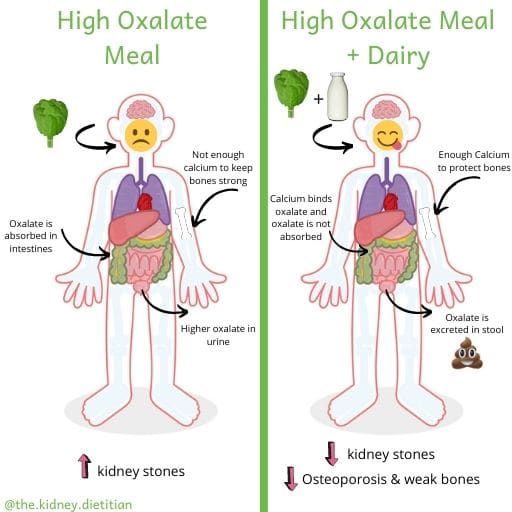
No matter the type of kidney stone, drinking at to the lowest degree 3 liters of fluid each day is very important.
A low oxalate diet may likewise be of import for kidney rock prevention. But, this is not the case for everyone.
Learn more about nutrition for calcium oxalate kidney stones. Or, read more about uric acrid kidney stones.
Getting Help For a Renal Diet
As you can see, in that location really is NO one "renal nutrition". A renal diet is individualized to your labs and medical history.
Putting all of this information together to figure out what to eat can be overwhelming. I highly recommend asking your nephrologist for a referral to run across with a Registered Dietitian to assist you.
In the The states, most insurance covers dietitian visits for kidney disease! It is never as well early (or, too late!) to work with a dietitian for kidney health.
For more help with kidney stones, check out my online course, Kidney Stone Nutrition School.
For more help with kidney disease, cheque out my friend, Jen Hernandez'southward course, Establish Powered Kidneys. Learn how food can slow the progression of kidney affliction.
I likewise take a list of dietitians who specialize in kidney disease and take virtual practices on my resources folio. The Academy of Nutrition & Dietetics and the National Kidney Foundation also have tools to help you find a renal dietitian near you!
Happy Eating!
Melanie
Source: https://www.thekidneydietitian.org/renal-diet/
0 Response to "what to do to prepare for a renal ul"
Post a Comment